
Property purchase costs in Spain – taxes, notary, lawyer
Purchase costs
Property purchase costs in Spain – taxes, notary, lawyer
Property purchase costs in Spain are a topic well worth understanding before you even start looking for a flat, an apartment or a house. Find out what the real purchase costs are – taxes, notary, lawyer, NIE number and all the additional fees.
Want to understand the full buying process? Read our guide on buying property in Spain step by step.
How much are the property purchase costs in Spain?
If someone asks how much it costs to buy a property in Spain, the most honest answer is: it depends on the type of property, the market, the region and how the whole transaction unfolds. From the buyer's point of view, however, the safest approach is to follow a simple rule: on top of the property price, it is worth allowing around 14–15% of the total amount for taxes and all the additional costs.
This sum usually covers taxes, the notary, the registry, the basic documents, administrative fees, any powers of attorney, translations and legal services. Some items will be small, but together they make up the real cost of the whole operation.
💡 Practical rule of thumb: add around 14–15% to the property price for additional costs
Taxes when buying property in Spain
Taxes are usually the largest part of the additional costs. Their level depends primarily on whether you are buying a resale (secondary market) or a new-build (primary market) property, as well as on the autonomous community. Since Tripinvest ES operates mainly on the Costa Blanca, the Valencian Community is the key one here.
Tip: the Generalitat Valenciana states that, as of 1 June 2026, the general ITP/TPO rate there is 9%, and the general AJD rate is 1.4%. See source: ATV
Secondary market
When buying a resale property, the main tax is ITP, the property transfer tax. It is this tax that usually makes up the largest part of the additional costs when buying a flat or a house from a private seller. In the Valencian Community the general rate is currently 9%, so the tax alone shows that you cannot look only at the property's asking price.
Primary market
On the primary market the cost structure looks different, because alongside the property price there are different tax charges than on the secondary market, and in practice AJD also applies. From a budget-planning perspective, the most important point is that with a new property too you need to factor in the full cost of the whole transaction, not just the developer's price.
That is why, in this case as well, it is sensible to assume a full margin of 14–15% on top of the price, especially if the buyer wants to account for all the formalities, documents and safe handling of the process.
Notary and registry fees in Spain
The buyer also pays the notary and registry costs. The Spanish Notarial Council points out that notary fees are set by a state-regulated tariff, rather than fixed at will by each notary. The Notariado also explains that, for identical services, notaries apply the same aranceles, and price should not be the main criterion when choosing a practice.
This matters, because it shows that when choosing a notary, trust and quality of service count for more than chasing an apparent saving.
Besides the notary, there is also the cost of registration in the Property Registry. This is a mandatory element from the standpoint of full legal security, because it is only a properly completed registration that puts the ownership situation in order after the transaction.
Information on notary fees - NotariadoLawyer's fees when buying property
In practice, one of the most sensible outlays when buying property in Spain is the cost of legal services. Many people try to keep expenses down and go it alone, but it is precisely at this stage that it is easiest to overlook problems with the documentation, charges, the property's consistency with the registry, or the terms of the transaction itself.
From the perspective of the buyer's security, it is far better to recommend working with a lawyer than going it alone. Lawyers are trained to analyse documents and spot risks that an inexperienced client may simply not notice. This is not a "just in case" cost, but a genuine element of buyer protection.
NIE number, nota simple and other fees
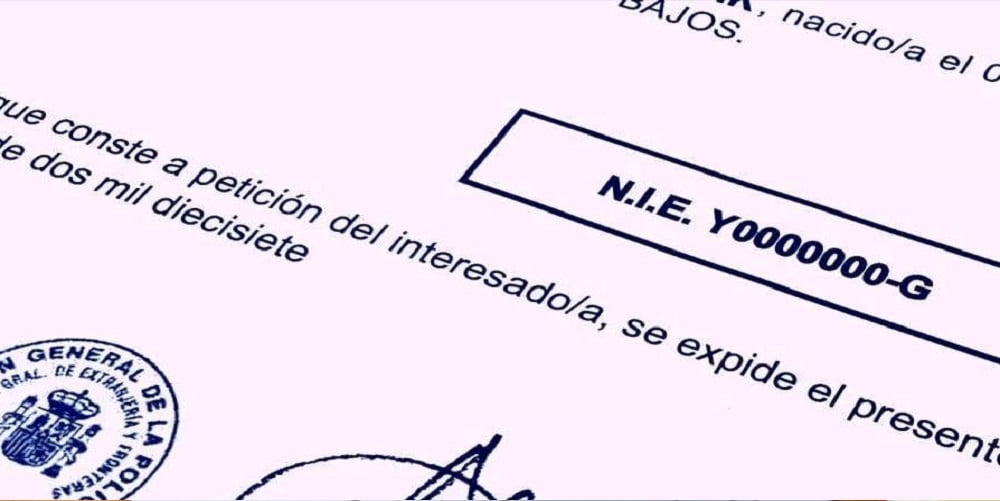
You also need to add the cost of documents and formalities to the total budget. The official Policía Nacional website states that assigning a NIE number at the applicant's request costs 9.84 euros, and that issuing certificates or attestations at the applicant's request costs 7.31 euros.
The Registradores, in turn, state that an ordinary nota simple online costs 9.02 euros plus VAT. These fees on their own are not high, but they show that the buying process involves many smaller items which together make up the full cost of the transaction.
On top of this, there may be translations, a power of attorney, bank fees, and the cost of preparing documents and arranging payments. That is why it is worth looking at the purchase as a whole and not basing your budget solely on the price shown in the listing.
Why allow 14–15% on top of the property price?
For most buyers, the most practical approach is one simple assumption: add around 14–15% of the total cost on top of the purchase price.
This is not an official, fixed rate for every property, but a safe budget-planning model that takes into account the taxes and other costs that usually arise during a purchase.
It makes it easier to assess whether a given property really fits within the buyer's financial means. This is exactly the approach that works best in conversation with a client, because it is practical and does not understate the real expenses.
Can you buy a property without a lawyer?
Technically it can be possible, but from a security standpoint it is not an approach worth recommending. When buying property in Spain it is better to use the help of a lawyer, who will check the documents, verify the legal status, analyse the terms of the contracts and make sure the whole process is carried out correctly.
Going it alone may seem cheaper at first, but the risk of a mistake can be far more expensive than the legal service itself. In practice it is better to pay for a professional review than to deal later with a problem that could have been avoided.
Summary
Property purchase costs in Spain are not just taxes. To the whole transaction you also need to add the notary, the registry, documents, the NIE, any translations, powers of attorney and legal services.
That is why the safest assumption is that the full sum of additional costs will come to around 14–15% on top of the property price. It is precisely this approach that lets you plan your budget realistically. At the same time, it is worth stressing that a property purchase is best carried out with the support of a lawyer, because even an attractive offer may require a thorough review of the documents and the legal status.
Related articles and listings
Sources / External links
Below are the official sources that the information in this guide is drawn from:
Frequently asked questions
How much are the property purchase costs in Spain?
Do you have to pay tax when buying property in Spain?
How much does a NIE number cost?
How much does a nota simple cost?
Is it worth using a lawyer when buying property in Spain?
Want to buy a property and know your real budget?
Get in touch with Tripinvest ES — we will help you work out the full purchase costs and go through the entire process safely, with the support of trusted specialists.
Get in touch