
Everything you need to know before purchasing property in Spain
Buyer's Guide
Purchasing property in Spain step by step – buyer's guide
Purchasing property in Spain step by step is a topic that interests more and more people planning to move, buy a holiday home or invest in rental. For Polish clients, the same issues are usually most important: how does reservation work, when do you need to obtain NIE number, is a bank account necessary, how does the notary act proceed and what are the real purchase costs. A well-planned process allows avoiding mistakes, delays and unnecessary costs. In practice, a Polish citizen can buy property in Spain, but should take care of formalities and document verification even before signing the final agreement.
Is this your first property purchase in Spain? Read our guide properties in Spain for Poles to learn all the most important information.
Can a Pole buy property in Spain?
Yes, a Polish citizen can buy property in Spain. The purchase itself does not require Spanish citizenship or residence, but in practice, appropriate identification data and documents are needed to finalize the transaction, including the NIE number. Spanish Police indicate the procedure for issuing the NIE number and documents required for this application in detail.
Tip: The official procedure for obtaining the NIE number is described on the website Policía Nacional .
Property purchase in Spain step by step
Choosing property and location analysis
The first stage is choosing a location, property type and total budget. This is important because the offer price is not the only expense. Taxes and formal fees are also added to the purchase. Therefore, it's good to count the full budget from the start, not just the apartment, apartment or house price. Transaction costs are a standard element of property purchase and include, among others, taxes and registration and notary fees.
Check current offers: Costa Blanca properties and apartments in Spain.
Property reservation
After choosing a specific property, a reservation agreement and deposit payment often takes place. At this stage, it's very important not to limit yourself to just the sales offer, but to check the basic legal data of the property and the conditions for refunding the payment if there is a problem with documents or transaction completion. This is a market practice element that should be specified in the documents prepared for the transaction.
Document and legal status verification
Before purchase, it's worth ordering a nota simple from the Property Registry. This document allows checking the owner, basic property data and any entries and burdens. The Property Registry indicates that nota simple is one of the basic tools for obtaining property information. At this stage, it's good to check document compliance, community situation, debt status and completeness of technical and administrative documentation. This is particularly important for the secondary market, where the legal and actual status of the property must be compared very carefully.
More information: Learn how to check property in Spain before purchase - step by step guide.
Cost: The official price of an ordinary nota simple online is approximately 9.02 euros plus VAT.
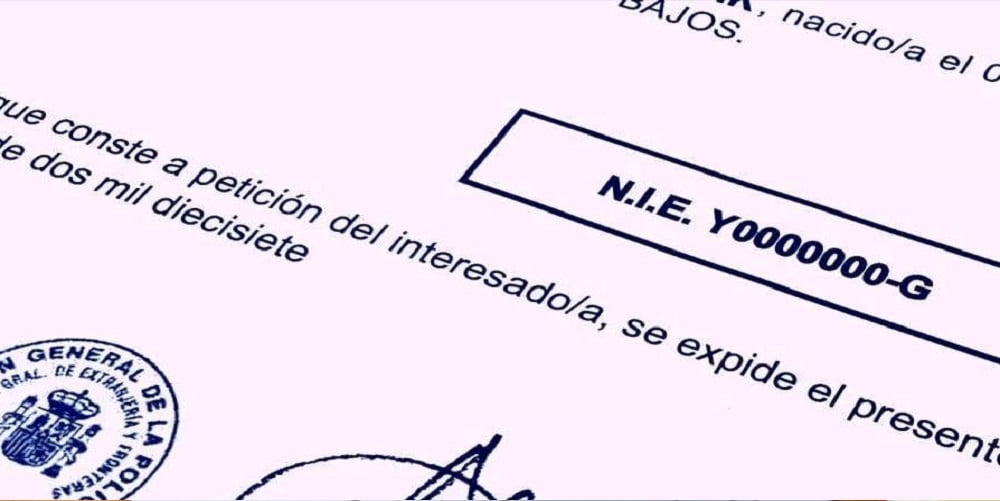
Obtaining NIE number
One of the most important stages is obtaining the NIE number, which is the Foreigner's Identity Number. The official procedure indicates that an EX-15 form and confirmation of model 790 payment code 012 are needed for the application. The Police website provides current rates: issuing NIE on request of the interested party costs 9.84 euros, and certificates or certificates issued on request of the interested party 7.31 euros.
In practice, it's worth taking care of the NIE number appropriately early, because without it it's difficult to smoothly go through the next transaction stages.
Bank account in Spain
A bank account in Spain is not always formally required at the very beginning of the process, but in practice it facilitates the purchase very much. It is needed for payments related to the transaction, taxes, utilities, community fees or later property maintenance. For a buyer from Poland, this is usually one of the natural organizational steps, especially if they plan longer stays or investment purchase.
Useful article: Check bank account in Spain for non-resident - how to open and what is needed.
Preliminary agreement
After positive property verification, the parties usually sign a preliminary agreement. This document establishes the price, deadlines, payment method, scope of responsibility and consequences of non-implementation of the transaction. A well-prepared preliminary agreement organizes the entire process and reduces the risk of misunderstandings between the parties.
Notary act
Transaction finalization takes place at the notary. This is when the property sale notary act is signed, and ownership passes to the buyer after fulfilling the transaction conditions. After the act, the tax must be settled and formal registration taken care of. Notary and registration costs are a standard element of property purchase in Spain.
Property registration after purchase
After signing the act, care must be taken to settle the tax and enter the ownership right into the Property Registry. This is the administrative stage, but very important from the point of view of the buyer's legal security. The Property Registry is the official source of information about rights entered into the property, so proper completion of this stage is of great importance.
What are the costs of purchasing property in Spain?
Purchase costs depend primarily on whether you are buying property from the secondary market or primary market, and also on the region. In the case of Costa Blanca, we are talking about the Valencian Community, where regional tax rates apply for some fees. The Generalitat Valenciana indicates that from June 1, 2026, the general TPO/ITP rate for properties is 9%, and the general AJD rate is 1.4%.
Detailed guide: Learn about property purchase costs in Spain - all taxes and fees.
Secondary market
On the secondary market, the main tax is ITP (Property Transfer Tax). In many regions of Spain it is approximately 9%.
Primary market
For the primary market, VAT (IVA) and AJD tax apply. These are the main costs when purchasing new properties.
Agencia Tributaria (VAT)Additional purchase costs
In practice, it is safe to assume that the total additional costs of purchasing property in Spain amount to approximately 14-15% of the property price.
What to watch out for when purchasing property in Spain?
-
1
Location and budget analysis Carefully analyze the area, infrastructure availability and real budget including all costs.
-
2
Property legal status verification Order nota simple and check if the property has no burdens, mortgages or other liabilities.
-
3
NIE number obtaining Remember that the NIE number is necessary to finalize the purchase - obtain it appropriately early.
-
4
Financing preparation If you need a loan, obtain pre-approval before signing the preliminary agreement.
-
5
Safe notary act signing Be present in person or appoint a proxy. Never sign documents without understanding them.
-
6
Property registration after purchase After purchase, register the property in the Property Registry and settle all taxes.
Summary
Purchasing property in Spain step by step does not have to be complicated, but requires good organization. If you include purchase costs, taxes and legal issues from the beginning, the entire process will be safe and predictable.
Related articles and offers
Sources / External links
Below are the official sources from which the information in this guide comes:
Frequently asked questions
Can a Pole buy property in Spain?
Is the NIE number needed?
How much does purchasing property cost?
What is nota simple?
Do I need a bank account in Spain?
Want to buy property in Spain?
Contact Tripinvest ES — we will help you go through the entire purchase process from property selection to finalization at the notary.
Contact us